
Time Line
1758
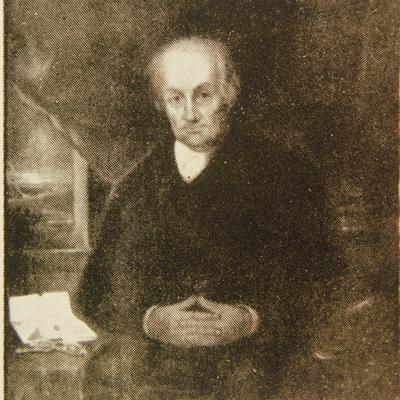
Farmington’s first owner, Francis Jerdone, purchases the land property.
1785
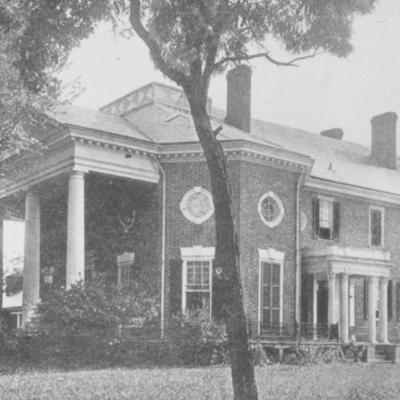
George Divers purchases the land and becomes the first person to live on the property.
1802
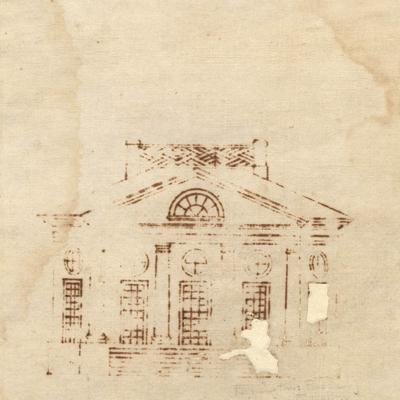
Thomas Jefferson sketches plans for an addition to be added to the original house.
1927
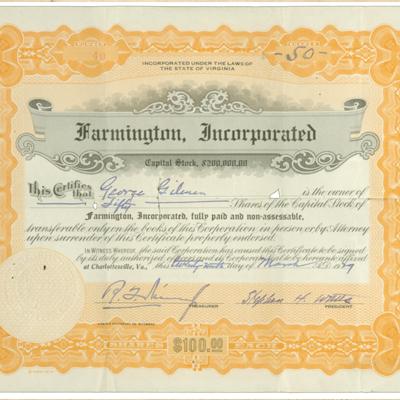
Certificate of Incorporation was issued to create Farmington Country Club.
1928
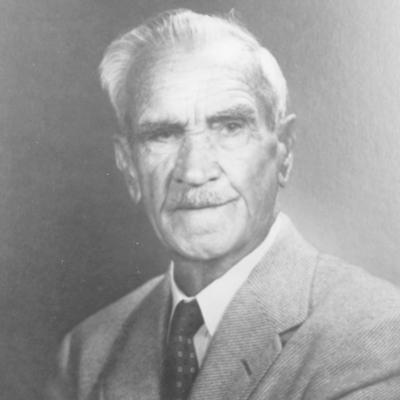
Fred Findlay begins work designing the Main Golf Course.
1929
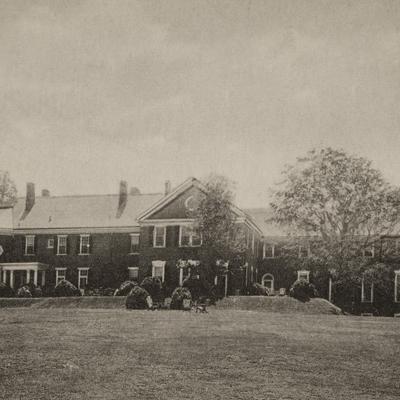
Farmington Country Club officially opens its doors.
1951
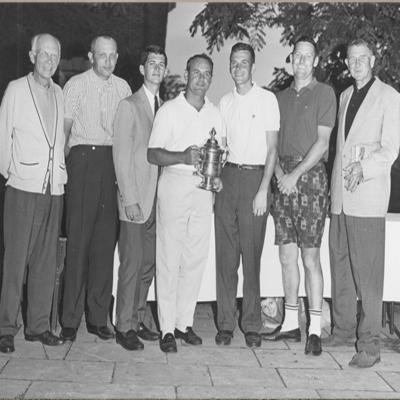
Buddy Loving wins his first Kenridge Invitational. He would go on to win five additional Kenridge Championships making him the tournament’s all-time winningest player.
1976
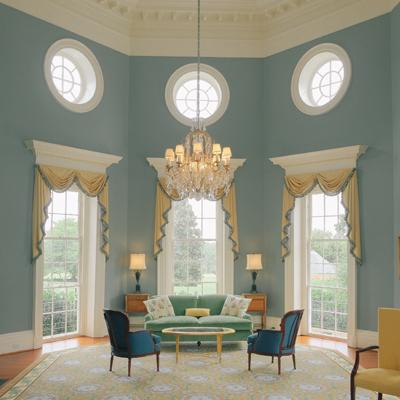
The Jefferson Room is restored under the direction of Dr. Frederick D. Nichols, professor of Jeffersonian Architecture at the University of Virginia.
1978
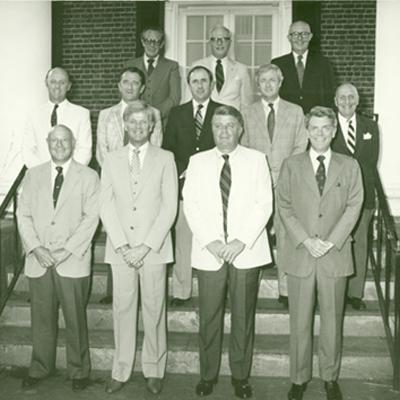
The Membership purchases the Club and the first Board of Directors is established. David Carr becomes the Club’s first president.
2021
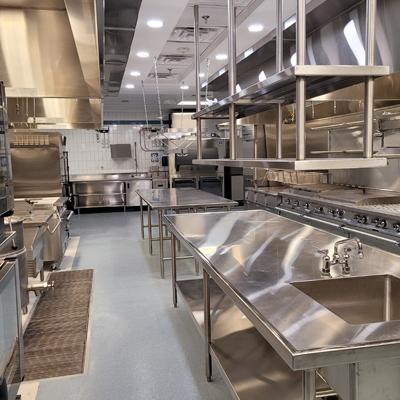
The Main Kitchen undergoes extensive renovations.
2021
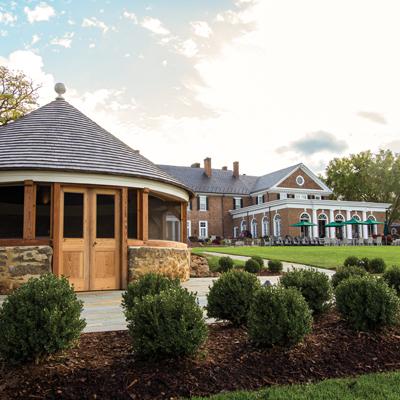
The Ice House restoration project is completed.
2027
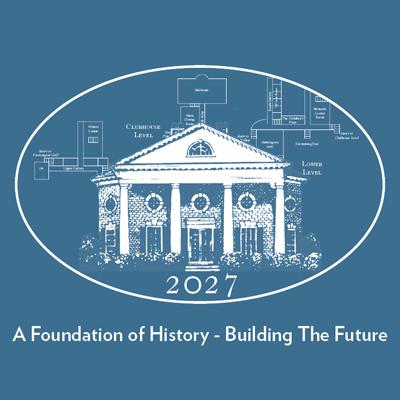
Farmington Country Club will celebrate its Centennial.
The estate of Farmington was patented in 1735, and was first built upon at some period prior to 1780. At the time of the American Revolution, the Commonwealth of Virginia confiscated the property from owner Francis Jerdone, who was a Tory, because of his political principles. Mr. Jerdone was able to regain the estate and then sold it to George Divers in 1785. Legend has it that Mr. Divers, who was in Philadelphia at the time of the sale, rode two horses to death in his dash south to claim the estate.
It was under Mr. Diver's ownership that in 1803, Thomas Jefferson drew plans for an addition to the house, an octagonal addition with two rooms. A subsequent owner, General Bernard Peyton, divided the Jefferson Room into two stories and four rooms.
In the spring of 1927, an idea was conceived by local businessmen to develop a country club and residential community of a quality that would do justice to the historic atmosphere of Albemarle County.
Farmington, an estate of nearly a thousand acres, was ideally suited for this purpose. Its handsome plantation house, recognized as a striking example of colonial architecture, the beautifully planted grounds and views of the Blue Ridge Mountains provided an unexcelled background for a country club in Charlottesville, Virginia.
On June 1, 1927, the Warner Wood Estate granted an option for the property known as Farmington, and on August 27, the State Corporation Commission issued a Certificate of Incorporation.
The first organizational meeting of the original sixteen subscribers was held September 3, 1927, and the following officers were elected: President, John S. Graves; Vice President, H.A. George; Secretary, Donald G. Stevens; and Treasurer, R.T. Minor, Jr. At the first Annual Meeting on January 11, 1928, Dr. Stephen H. Watts was elected President, John S. Graves and H.A. George, Vice Presidents.
By this time, work on the roadways, bridle paths and a steeplechase course were well under way, and renowned golf course architect Fred Findlay had begun work on the design and preparation of the course. Throughout 1928, workmen enhanced the landscape of the entire property, adapting the beautiful plantation for the purposes of a modern country club with outdoor facilities. The plantation renovations begun in 1927 were completed in May of 1929, and the Club and grounds were formally opened on May 15, 1929, at which time Farmington Country Club became a reality.
Restoration of the old house began in the spring of 1929. Fortunately, the University of Virginia possessed Mr. Jefferson's original plans for the octagonal room, making it possible to restore the interior, which had suffered considerable alteration. Partition walls that had divided Mr. Jefferson's principal room into four were removed, and the house now reflects the vision of its great builder. Since that time it has been known as the Jefferson Room. In 1976, the Jefferson Room was completely refurbished to portray the perceived intentions and vision of Mr. Jefferson. This work was performed under the direction of Dr. Frederick D. Nichols, Professor of Jeffersonian Architecture at the University of Virginia.
